Every category a business runs on
Excavators and loaders, trucks and trailers, CNC and press lines, medical and dental suites, tractors and combines, forklifts, commercial kitchens and server rooms.
This takes a few seconds. Please don’t close this page — we’ll take you straight to your secure application when it’s ready.
King Capital places equipment files with lenders that underwrite the asset — a purchase from a dealer, a refinance of equipment already owned, or a sale-leaseback that turns it back into working cash. The application describes the equipment and the business that runs it. It continues in the secure application once the file is open.
The equipment secures the loan. The business that runs it is what sizes it.
New equipment carries the longest terms and the highest advance against cost.
Hours, miles and the serial number are what a lender uses to value used equipment. Leave them blank on a new unit.
The address of the business taking on the debt, which is also where the equipment will be based.
Profit after operating expenses, before the payment on this equipment. The loan is sized off this number.
The owner is underwritten alongside the equipment. This is your half. We already have your name and how to reach you.
The quote is what prices the loan, and the bank statements are what size it. Those are the documents every equipment file starts with.
Attach what you have. Nothing here holds up the review. The rest can go up later in your secure application.
A personal financial statement, the current equipment schedule, an appraisal on a used unit, insurance certificates, and anything else already in hand. No limit on how many.
PDF, JPG, PNG, Excel or Word, up to 100 MB per file. Titles, the UCC search and proof of insurance come later in the secure application.
Check the numbers on the equipment. You can go back and change anything.
Your file is going out to the lenders now. This takes about a minute, and the offers land in your portal as they come back.
King Capital takes the quote and the operating numbers to lenders that finance equipment: bank and captive paper on new units, independent lessors on used and specialty machines.
Excavators and loaders, trucks and trailers, CNC and press lines, medical and dental suites, tractors and combines, forklifts, commercial kitchens and server rooms.
The file goes out complete, so the first question back is about terms rather than about a missing document.
The same package is read by every lender on the file, which is what makes the terms that come back comparable.
King Capital stays on the file through the lifecycle of the loan, and the portal shows where it stands at each stage.
The equipment, the operating numbers and the owner, in one application with no fee.
The request is measured against the cost of the unit, its resale value and what the business earns.
The vendor quote, the bank statements and the returns go up once, into one repository.
Rate, term, payment and the advance against cost come back in the portal for review.
The lender pays the dealer, and the file stays visible in the portal until the unit is delivered.
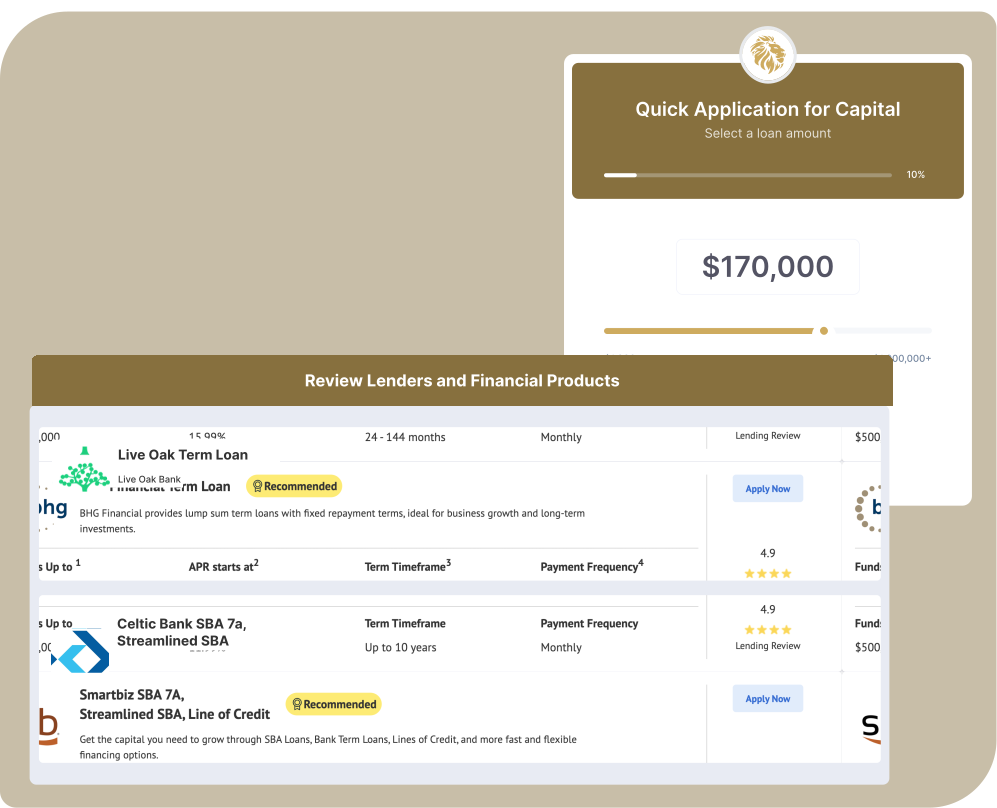
What the programs allow, and where an equipment request usually lands.
Most equipment paper runs 24 to 84 months, set against how long the unit will actually earn.
A fleet order is split across lenders rather than trimmed to fit one balance sheet.
A dealer purchase, a private-party unit, a refinance of equipment on the books, or a sale-leaseback that frees the cash back up.
Send the quote and the operating numbers. King Capital sizes the request, takes it to lenders that finance the category, and returns the terms in the portal.
Rather talk it through first?